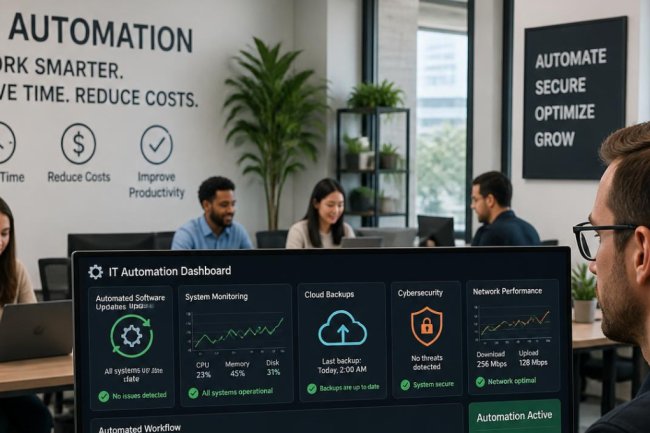
Why Healthcare Organizations Need Managed IT Services
Learn why healthcare organizations rely on managed IT services to protect patient data, ensure HIPAA compliance, reduce downtime, and improve overall operational efficiency with secure and reliable IT infrastructure.

Healthcare organizations rely heavily on digital systems for patient records, diagnostics, billing, and communication. As technology becomes more central to care delivery, the need for reliable, secure, and well-managed IT infrastructure has become critical. Managed IT services help healthcare providers stay efficient, compliant, and protected from growing cyber threats.
At LA IT Consultants, we support healthcare practices in Los Angeles with secure, scalable, and fully managed IT solutions designed specifically for the medical environment.
What Are Managed IT Services?
Managed IT services refer to outsourcing IT operations to a specialized provider who proactively manages, monitors, and maintains an organization’s technology systems. Instead of reacting to problems, managed service providers focus on prevention, optimization, and continuous support.
1. Stronger Data Security and Patient Protection
Healthcare organizations handle highly sensitive patient information. This makes them a major target for cyberattacks, ransomware, and data breaches.
Managed IT providers implement advanced security measures such as encryption, firewalls, endpoint protection, and continuous monitoring to safeguard systems and patient data.
According to Cybersecurity principles, proactive defense is far more effective than reactive fixes after an attack occurs.
2. HIPAA Compliance Support
Healthcare providers must comply with strict regulations like HIPAA (Health Insurance Portability and Accountability Act). Non-compliance can lead to heavy penalties and loss of patient trust.
Managed IT services help ensure systems are configured and maintained according to compliance standards, including secure data storage, access control, and audit readiness.
3. Reduced Downtime and Faster Issue Resolution
Even minor IT issues can disrupt patient care, delay appointments, and impact operations. Managed IT services provide 24/7 monitoring and rapid support to minimize downtime.
This ensures critical systems such as electronic health records (EHR) and scheduling platforms remain operational at all times.
4. Improved Data Backup and Disaster Recovery
Data loss in healthcare can be catastrophic. Patient records, prescriptions, and diagnostic data must always be protected and recoverable.
Managed IT providers implement automated backup systems and disaster recovery plans based on Disaster Recovery best practices to ensure continuity even in emergencies.
5. Better Performance of Healthcare Applications
Modern healthcare depends on software like electronic health records (EHR), imaging systems, and billing platforms. Poorly optimized IT systems can slow down these tools and affect productivity.
Managed IT services ensure that all applications run smoothly, are regularly updated, and are properly integrated into the organization’s workflow.
6. Cost Efficiency and Predictable IT Spending
Instead of unpredictable repair costs and emergency fixes, managed IT services provide a fixed monthly cost model. This allows healthcare organizations to better plan budgets and reduce unexpected expenses.
7. Access to Expert IT Support
Healthcare providers often lack in-house IT teams with specialized knowledge in compliance, cybersecurity, and medical systems. Managed service providers offer access to experienced professionals who understand healthcare technology requirements.
How LA IT Consultants Helps Healthcare Providers
At LA IT Consultants, we deliver tailored IT solutions for healthcare organizations including:
- HIPAA-compliant IT infrastructure
- 24/7 system monitoring and support
- Advanced cybersecurity protection
- Secure cloud solutions
- Data backup and disaster recovery
- Network optimization for medical applications
Conclusion
Managed IT services are no longer optional for healthcare organizations—they are essential. From protecting patient data to ensuring system uptime and regulatory compliance, these services help healthcare providers focus on what matters most: delivering quality care.
Partnering with LA IT Consultants ensures your healthcare practice remains secure, compliant, and fully optimized for modern digital healthcare demands.